Collective investment trusts (CITs) are a popular investment option for defined benefit retirement plans, and their use by defined contribution plan sponsors continues to grow. CITs offer many advantages for the efficient and safe management of pooled investment assets and operate within well-established regulatory frameworks under both banking and fiduciary laws. CITs that manage 401(k) assets are also subject to the Employee Retirement Income Security Act (ERISA), which provides an additional layer of oversight and protection.
How CITs are regulated
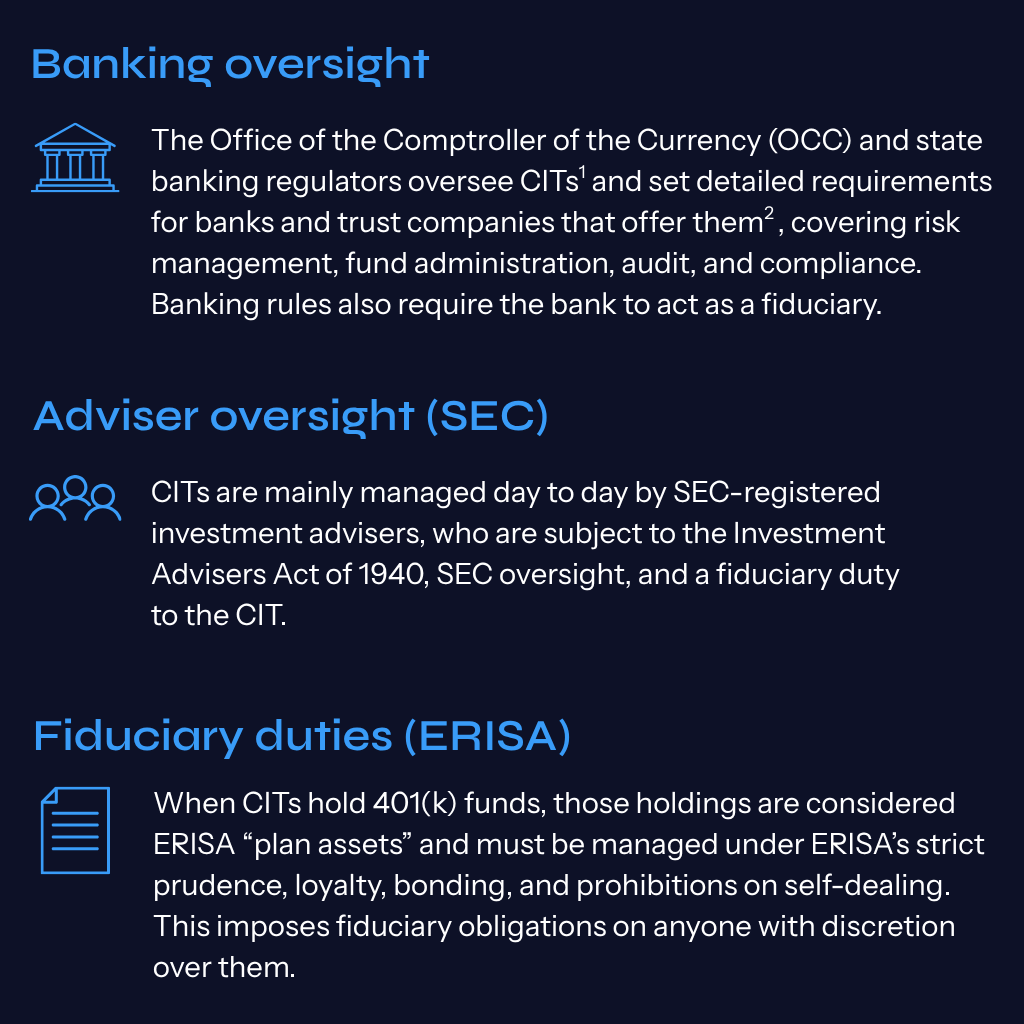
CITs are subject to regulation under banking and fiduciary laws. When used to hold 401(k) assets they are subject to three layers of regulatory oversight:
1 12 C.F.R.§ 9.18 2 Comptroller’s Handbook, Collective Investment Funds (May 2014, last updated March 20, 2025)
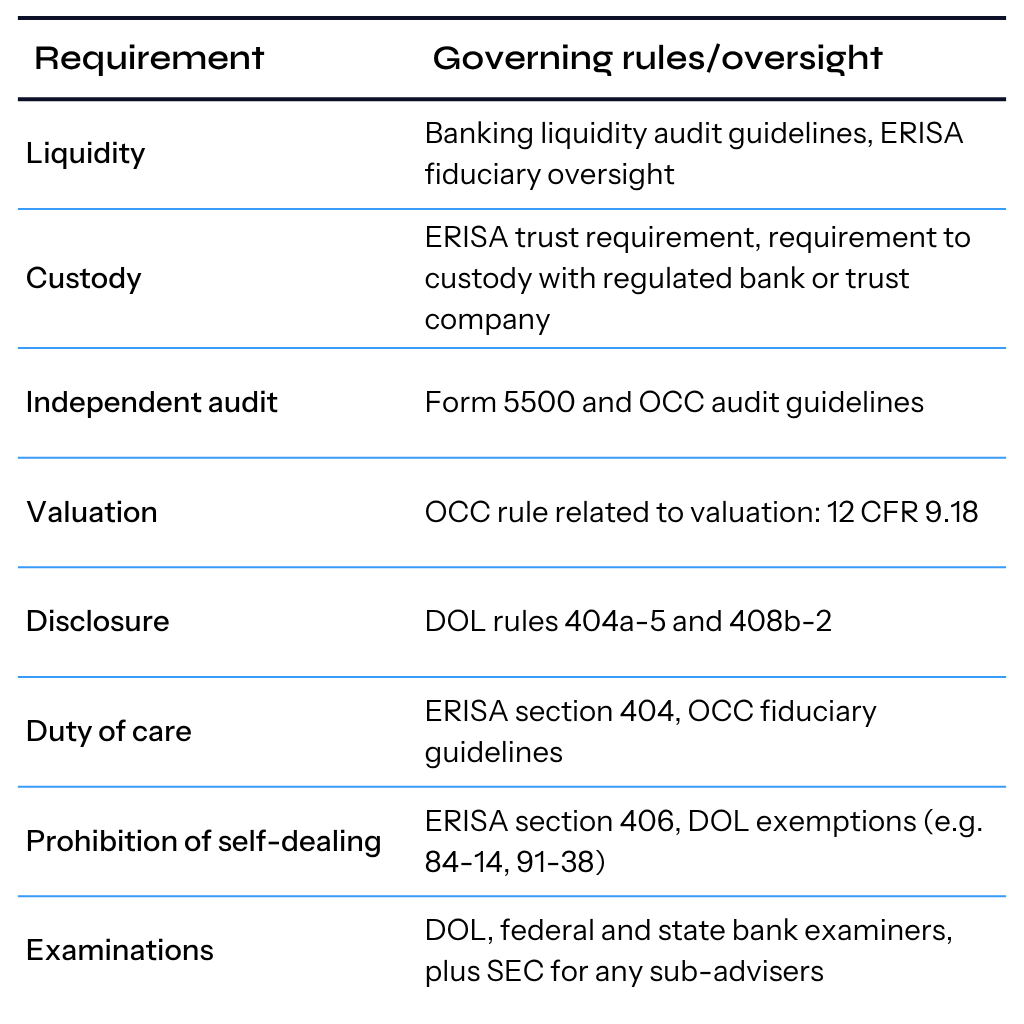
Sample of key rules governing CITs
What CITs must disclose
CITs are subject to disclosure obligations at three levels: to the public, to plan participants, and to employers acting as plan fiduciaries.
Public disclosure: The banking regulators require CITs to make am publicly available written plan disclosing investment policy, use of income and profit, fees, audit, valuation, and distributions.
Participant disclosure (DOL): ERISA rules3 require participants to receive a chart comparing all plan investment options, including CITs, by fees, performance, benchmarks, and investment type. Participants must also be informed promptly of any menu changes. CIT providers issue prospectus-like fund “fact sheets” with this and additional information. On request, participants can also receive the CIT’s financial statements and reports, and full portfolio holdings.
Employer and public disclosure (DOL): Plan fiduciaries (e.g., employer or plan sponsor) evaluating a CIT receive the fund’s trust and participation agreements (and any amendments), the direct and indirect fee and cost disclosures required by DOL rules, and the fund’s annual Form 5500, which includes a schedule of assets and an independent audit report. Form 5500 are also posted publicly on the DOL website, giving participants and other stakeholders access to the same information.
3 29 C.F.R. § 2550.404a-5.
Related Research
October 7, 2026BlogExternal Research
New research: Bank-private credit links show no increase in systemic vulnerability