Short selling is a regulated and widely used strategy. Investors use short selling when they believe, based on fundamental research, that a stock price is overvalued. Short selling promotes liquidity, stabilizes markets, and helps investors and companies reduce risk in their portfolios.
Some short sellers also conduct in-depth research and analysis that exposes financial fraud and corruption, including in the Enron, Valeant, and Wirecard corporate corruption scandals. Additionally, short sellers correctly indicated the U.S. housing market was overvalued before the 2007-2008 financial crisis.
Regulators have long recognized the vital role of short selling to help markets function efficiently. The practice of short selling is well regulated. It has the proper oversight and transparency that allows the strategy to benefit a wide array of investors.
Some short sellers conduct in-depth research and analysis that exposes financial fraud and corruption.
Securities laws give the SEC the authority to gain access to trading information and to prevent market manipulation. Permitting short selling, particularly with the current robust regulatory framework, means that investors can manage risks better and markets can factor in the broadest possible views about a particular stock, bond, or index – reducing the likelihood of bubbles forming.
Investors most commonly use “short” positions to express a view that a security, such as a stock, is overvalued.
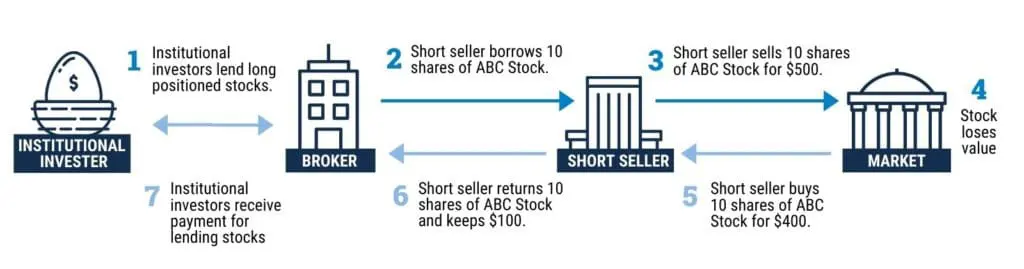
When an investor “shorts” a stock, the following happens:
If the share price of the shorted stock goes down, the investor will receive a profit equal to the difference between the money they received when selling the borrowed shares and the cost of repurchasing the shares at a lower price.
If the share price rises, the investor will incur a loss as they will have to repurchase the shares at a higher price than the amount they received from selling the borrowed shares.
Short selling benefits society, markets, and people
Hedge funds may decide to short a stock for a variety of reasons. In some cases, they uncovered fraud or illicit business practices through highly sophisticated research. In fact, short sellers played a key role in uncovering fraud in the Enron, Wirecard, and Valeant scandals.
Section Title
We are the voice of the global alternative asset management industry. As the authoritative voice of the industry and premier platform for networking and training.
Enron Short Seller Detected Red Flags in Regulatory Filings
We are the voice of the global alternative asset management industry. As the authoritative voice of the industry and premier platform for networking and training,
Wirecard shows why bans on short-selling are badly misguided.
We are the voice of the global alternative asset management industry. As the authoritative voice of the industry and premier platform for networking and training,
Short Sellers Don’t Exist to Fix the Problems. They Exist to Shed Light on the Problems
We are the voice of the global alternative asset management industry. As the authoritative voice of the industry and premier platform for networking and training,
In other cases, investors may take a short position because they believe a company’s management is not adapting to technological advances or emerging threats.
Hedge funds use short selling to deliver returns and shield their investors — including pensions, foundations, and endowments — from market volatility and asset bubbles. These same investors also earn money from lending securities to short sellers, boosting returns for their beneficiaries.
As a result, short selling helps protect the retirement security of 26 million Americans, advance educational opportunities for tens of thousands of students, and support the missions of thousands of nonprofits across the country.
Public pension funds with the most securities lending
In 2023, pension funds earned more than
$700 million from securities lending.
View the 20 public pension funds with the most securities lending in MFA’s Short Selling White Paper.
Short selling strengthens market integrity and delivers returns for institutional investors and those they serve.
Short selling is regulated by the SEC, state regulators, and the U.S. Commodity Futures Trading Commission (CFTC). Preserving short selling is essential to maintain the integrity of our financial markets and protect the millions of Americans who benefit from short selling.
Overline
Learn more about short selling
Optional lede statement about the content in this section can go here and be two lines long.
We are the voice of the global alternative asset management industry. As the authoritative voice of the industry and premier platform for networking and training, MFA delivers value across all functional areas of member firms.
Short selling can enhance price accuracy, increase market liquidity, and help investors manage risk. It allows markets to reflect a broader range of views about a stock, bond, or index, which can help identify overvalued assets and reduce the likelihood of market bubbles.
Is short selling regulated?
Yes. Short selling is a regulated and widely used investment strategy. In the United States, the SEC, state regulators, and the U.S. Commodity Futures Trading Commission (CFTC) enforce strict rules preventing abusive trading practices and market manipulation.
How is short selling different from buying a stock?
An investor who buys a stock generally expects its value to rise. In a short sale, an investor borrows shares for a fee and sells them based on the view that the stock is overvalued. The investor later buys shares to return to the lender. The investor profits if they are able to repurchase the stock at a lower price; if the price instead rises, the investor incurs a loss. Short selling is available to both retail and institutional investors, but the vast majority of short-selling activity is conducted by professional investors.
Who benefits from short selling?
Short selling benefits market and investors by supporting accurate prices, adding liquidity, reducing volatility, and helping investors manage risk. Large holders of stocks, including pensions, foundations, and endowments, may also earn additional returns by lending securities to short sellers, supporting the beneficiaries and communities they serve.
Does short selling uncover fraud?
Short sellers often conduct in-depth research that can uncover fraud, corporate misconduct, and other hidden risks. Short sellers played a key role in bringing attention to major corporate scandals such as Enron, Wirecard, and Valeant. Not all short sellers engage in strategies that rely on directional moves in the investment and rely on short selling to hedge risk and reduce volatility in other parts of their portfolios.
What is a short squeeze?
A short squeeze can occur when a stock’s price rises sharply, and short sellers buy shares to close their positions and limit potential losses. That additional buying can increase demand for the stock, which can push the price even higher, putting further pressure on other short sellers. These events are uncommon.
Related resources
December 16, 2025Letters
MFA send letter to FCA supporting short selling reform